Weed Embroidery Design: A Practical Review for Makers
As a designer who has spent years digitizing patterns and testing them on everything from stiff denim to delicate baby onesies, I approach every new machine embroidery design with a critical eye. It is not enough for a graphic to look good on a screen; it must hold up under the needle. Recently, I evaluated the Weed design, a digital asset categorized under Crafts and Graphics, to determine its viability for real-world projects. This review is written for fellow embroidery designers, Etsy sellers, and hobbyists who need to know if this file will translate well into a high-quality finished product.
First Impressions and Visual Personality
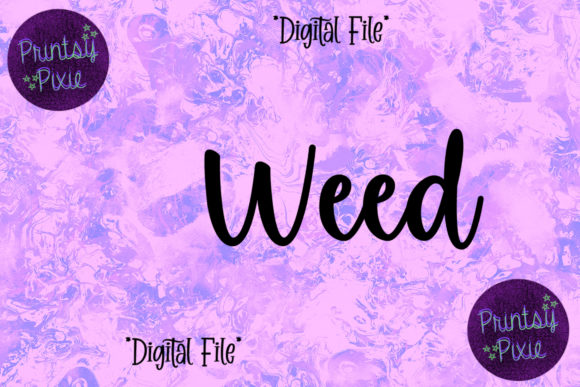
The first thing that strikes you about the Weed design is its organic, slightly rebellious aesthetic. Unlike rigid geometric patterns, this graphic carries a natural flow that mimics the irregular growth of foliage. For an embroidery project, this is both a blessing and a challenge. The visual personality suggests a rustic, bohemian, or herbal theme, making it an excellent candidate for brands focused on natural living, apothecary items, or eco-friendly goods.
When I loaded the SVG File and Transparent Image File into my design software, I noticed the lines were clean but possessed enough curvature to require careful handling during digitization if one were converting it manually. However, since this is provided as a ready-to-use graphic compatible with platforms like Cricut Design Space and Silhouette, the primary concern shifts to how these shapes translate into stitch types. The design does not appear overly dense, which is a positive sign for maintaining fabric drape, especially on softer materials.
Real-World Application: The Tote Bag Test
To truly understand the value of this design, I imagined a specific scenario: creating a custom tote bag design for a local farmer’s market vendor. The client wanted something simple yet recognizable, something that said "fresh" without being cliché. The Weed graphic fit this brief perfectly. Its silhouette is distinct enough to be recognized from a distance, which is crucial for small shop product visibility.
In this context, the design would likely perform best as an applique design or using a combination of satin stitch borders and fill stitch interiors. If used as a standard embroidery pattern, the lack of excessive internal detail means it will stitch out quickly, reducing machine time and thread consumption. This efficiency is vital for craft business owners who need to balance quality with production speed. The resulting handmade product would feel artisanal and thoughtful, appealing to customers who value unique, non-mass-produced items.
Versatility Across Product Lines
Beyond tote bags, the Weed design shows promise in several other areas. For sweatshirt embroidery, the graphic’s open structure prevents the garment from becoming stiff or board-like, a common issue with large, dense designs. On a custom apparel piece like a linen apron, it could serve as a charming pocket accent. For baby embroidery, such as on a muslin swaddle or a neutral-toned onesie, the simple lines allow for soft, pastel thread colors to shine without overwhelming the delicate fabric texture.
However, versatility does not mean universal suitability. While the design works well on flat surfaces like pillow covers or tea towels, caution is needed when applying it to curved surfaces like caps. The organic curves of the weed motif might distort if the hoop tension is not perfectly balanced. Similarly, for an embroidered patch, the edges must be secured with a tight satin border to prevent fraying, ensuring the personalized gift remains durable through washes.
Technical Considerations for Stitching
From a technical standpoint, working with the Weed file requires attention to detail. Since the product description specifies compatibility with various design softwares but does not provide exact stitch counts or density maps, I strongly advise running a test stitch on scrap fabric. This step is non-negotiable for professional results. You need to verify the stitch density to ensure it does not pucker lightweight fabrics like chiffon or thin cotton.
When dealing with dark fabrics, the contrast becomes key. If you are using a single-color thread, ensure the thread colors chosen stand out against the background. A green thread on a black shirt might get lost, whereas a cream or gold thread could create a striking, elegant effect. For those considering this for holiday embroidery or seasonal gifts, experimenting with metallic threads could add a festive touch, though this requires slower machine speeds to prevent breakage.
Another critical factor is stabilizer selection. Given the organic, potentially sprawling nature of the design, a cut-away stabilizer is recommended for stretchy fabrics like jersey knits to maintain shape over time. For woven fabrics like canvas or linen, a tear-away stabilizer may suffice, provided the hoop size is appropriate for the design dimensions. Always check the actual size of the SVG or image file before hooping to avoid cropping essential parts of the motif.
Commercial Viability and Brand Consistency
For Etsy sellers and digital embroidery file resellers, the commercial potential of the Weed design hinges on its adaptability. Does it fit your brand? If your shop specializes in witchy, botanical, or cottagecore aesthetics, this graphic is a strong asset. It enhances brand consistency by providing a recognizable visual element that can be repeated across different products, from mugs (via sublimation using the transparent image) to stitched apparel.
Customer trust is built on quality. A poorly stitched design looks amateurish and can damage your reputation. By testing the Weed design thoroughly—checking for jump stitches, loose threads, and alignment—you ensure that every commercial embroidery item you sell meets high standards. Use printable mockup tools to visualize the design on different products before listing them. This helps in creating compelling product photos that drive buyer engagement.
Important Licensing and Usage Notes
Before integrating this design into your design assets library, confirm the licensing terms. The product description mentions compatibility with Cricut and Silhouette, suggesting it is primarily a cut file or graphic, but many users adapt these for embroidery. Ensure you have the right to use it for commercial embroidery if you plan to sell finished items. Some licenses allow personal use only, while others permit small-batch commercial sales. Never assume; always read the fine print to protect your business.
Final Verdict for Makers
The Weed design is a versatile, aesthetically pleasing graphic that holds significant potential for makers who appreciate botanical themes. Its simplicity is its strength, allowing for quick stitching and broad application across various textiles. However, success depends on proper preparation. Test your tension, choose the right stabilizer, and respect the fabric’s limitations. When executed with care, this design can elevate a simple tote bag or sweatshirt into a cherished personalized gift or a standout item in your online store. For the experienced designer, it is a useful tool in the kit; for the beginner, it is a forgiving introduction to organic motifs. Just remember: the screen is not the fabric. Always stitch a sample first.